The Interreg Europe project, Debuting, in which Sodena participates, continues to make steady progress in Navarre, as demonstrated in several national and international forums. For example, the project was presented at the conference on ‘Integrating Equality in Public and Private Management in Navarre’, organized by Areté Activa.
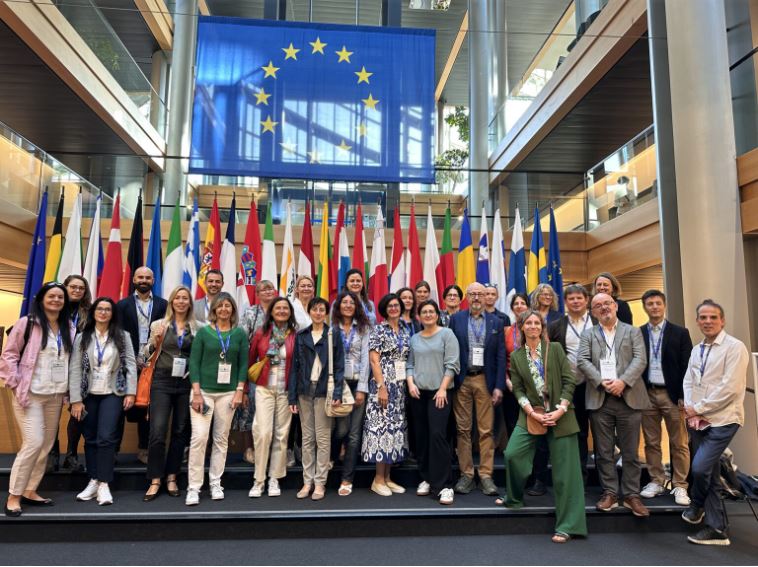
It was also present at the seminar on ‘Gender Equality: European Policies and the Situation in Navarra’ organized by the Directorate of External Action of the Government of Navarra. At the same time, its leaders traveled to Strasbourg, where they were able to see firsthand some of the political instruments used by the Grand Est region (a European region participating in the project) for issues of equality and the Smart Specialization Strategy (S3).
In any case, the reports analyzed within the framework of the project show that the number of women in industry, the main driver of the Navarre economy, is less than 30% and that, in addition, their average salaries are lower. On the other hand, with regard to their participation in vocational training, there is clear gender segregation among students in different degrees, such as electricity and electronics or mechanical manufacturing, in which there are no women enrolled, while in others (such as personal image) they account for more than 80% of enrolments.
In this regard, the conference on Integrating Equality in Public and Private Management consisted of various presentations and round tables that highlighted the economic implications of equality.
To understand the current context, we must look to history; over the years, women have entered the labor market from the care sector. As a result, they continue to be the ones who make the most use of leave for caregiving (up to 90% of requests come from women in the case of childcare) and also the ones who take on the greatest number of part-time jobs (3 out of 4 correspond to women); a perspective that needs to change in order to move forward.
This paradigm has led to many studies that have shown how equality leads to an increase in productivity for companies of between 5% and 20%, which also means greater profits. In this sense, companies should see the creation of equality plans as an opportunity to better understand what is happening and how to address talent retention and attraction in order to create a competitive advantage.
Despite all this evidence, equality still faces obstacles and resistance that must be overcome. That is why it is essential to challenge men. Achieving commitment from all segments of society, a change in culture and customs, training, resources, and time will be the basis for creating a new model of equality, a model to which the Debuting project will contribute.
Debuting is an Interreg Europe project involving members of Sodena, with 11 partners from 10 European regions participating, which aims to promote gender equality in industry as a factor in business competitiveness.

In the image, speakers at the conference ‘Integrating Equality in Public and Private Management in Navarre’. Second from the left, Beatriz Blasco, Sodena Project Manager.